
Best beaches in Alicante: where to swim
Guide to Playa San Juan, Postiguet, Albufereta, Tabarca and Cala Granadella, with facilities, transport, who each beach suits and practical tips.
Best beaches in Alicante and the nearby Costa Blanca
Alicante has several excellent urban and sandy beaches, while the Costa Blanca adds strong day-trip options. For most travellers, Playa San Juan is the best choice for a full beach day, Postiguet is the easiest from the city centre, and Tabarca is the most distinctive option for snorkelling and a boat trip.
In 2026, San Juan, Postiguet, Saladares-Urbanova and Tabarca hold Blue Flag status in Alicante municipality. Albufereta is a smaller, calmer urban beach with fine golden sand. Farther north, Albir and Cala Granadella are useful options if Alicante is your gateway to the wider Costa Blanca.
Quick choice
- Best all-round: Playa San Juan
- Closest to the centre: Postiguet
- Calmest with young children: Albufereta
- Snorkelling + day trip: Tabarca
- Dramatic scenery: Cala Granadella
- Quieter Costa Blanca base: Albir
Plan the rest of your beach trip
Once you have chosen the beach, continue with accommodation, weather and activities:
Playa San Juan: Alicante's best long sandy beach
Playa San Juan is Alicante's large urban sandy beach northeast of the centre. The official beach is about 2.9 km long and 85 metres wide, with fine golden sand, a promenade, restaurants and extensive facilities. It continues north towards Muchavista in El Campello, which explains why the wider stretch is often described as much longer.
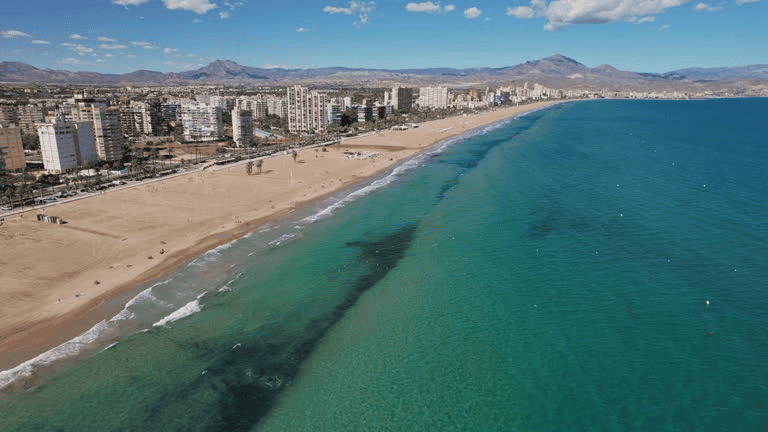
Playa San Juan – a long, broad sandy beach with promenade and easy access from Alicante.
Practical information: Playa San Juan
- Length: about 2.9 km (official Playa San Juan)
- Sand: Fine golden sand
- Quality: Blue Flag in 2026
- Facilities: First aid, toilets, loungers/parasols, play and sports areas, restaurants and summer beach bars
- Transport: TRAM lines 3, 4 or 5; buses 21/22 and night services
- Best for: Families, full beach days, beach holidays and water sports
Why choose it: San Juan gives you the most space and the clearest beach-holiday feel without leaving Alicante.
Playa del Postiguet: city beach beside the Old Town
Postiguet is Alicante's classic central beach, 900 metres long and roughly 50 metres wide, immediately beside Santa Bárbara Castle, the Explanada and the Old Town. It is particularly practical if you are staying centrally and want to combine sightseeing with a few hours by the sea.
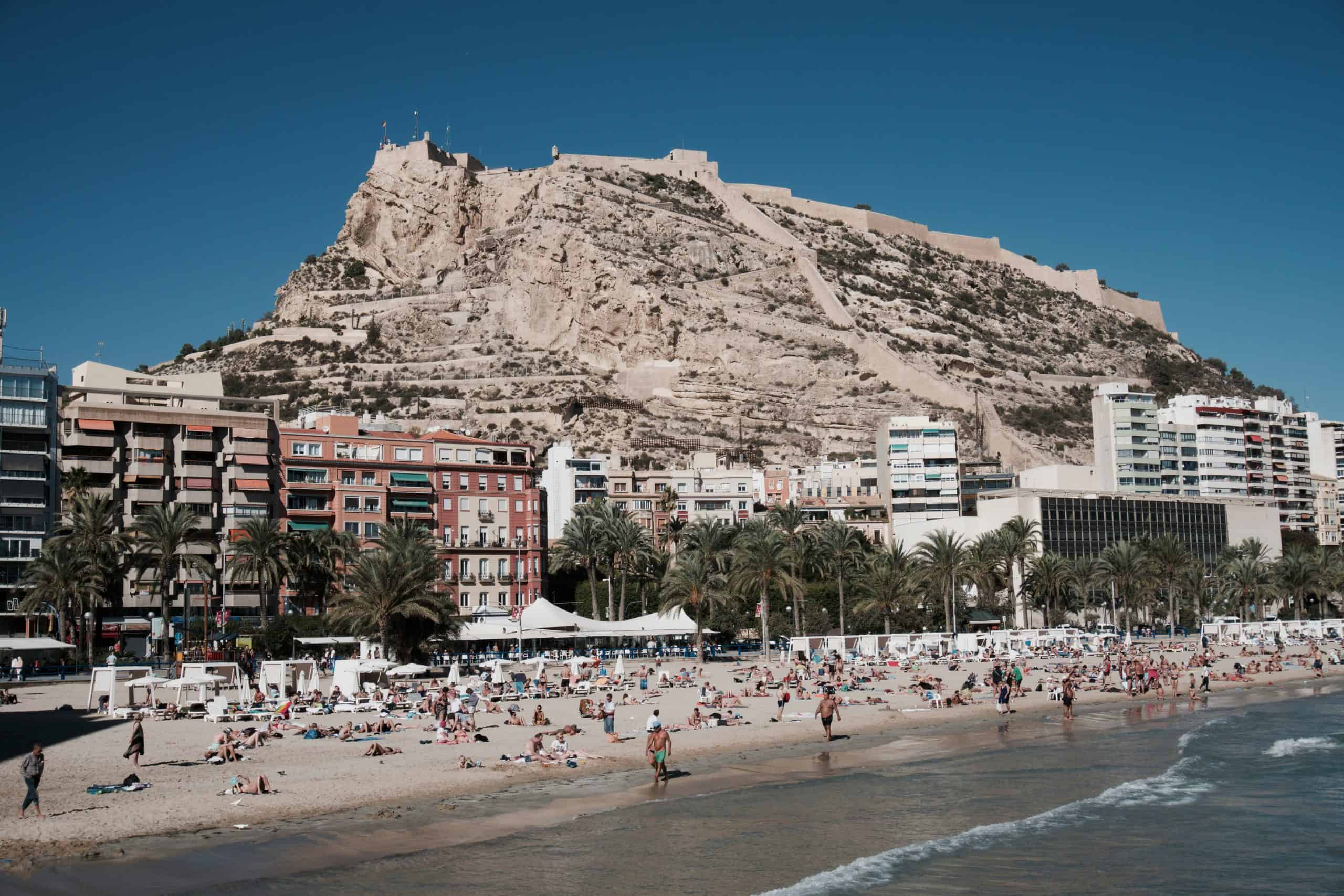
Postiguet – 900 metres of urban beach beside the city centre and Santa Bárbara Castle.

Albufereta – a smaller, calmer beach northwest of the centre.
Practical information: Postiguet
- Length: 900 m
- Sand: Fine golden sand
- Quality: Blue Flag in 2026
- Facilities: First aid, toilets, loungers/parasols, play and sports areas; summer beach bar
- Transport: Walk from the centre; TRAM line 5 serves Puerta del Mar/Postiguet
- Best for: City breaks, short beach sessions and travellers without a car
Why choose it: no other beach is as convenient if central Alicante is your base. It can be busy in July and August, so San Juan is often more comfortable for a full beach day.
Platja de l'Albufereta: a calmer family beach
Albufereta sits northwest of the centre between Serra Grossa and the Tossal de Manises archaeological site. It is about 400 metres long, with fine golden sand and generally calmer water than the more open beaches.
Practical information: Albufereta
- Length: 400 m
- Sand: Fine golden sand
- Facilities: First aid, toilets, loungers/parasols, children's play area, parking and a summer beach bar
- Transport: TRAM to Isleta; several bus services from central Alicante
- Best for: Families, quieter beach days and shorter swims
Why choose it: a useful compromise if you want a smaller, quieter beach without travelling far from Alicante city.
Tabarca Island: clear water and snorkelling
Tabarca lies about eleven nautical miles from Alicante and is the only inhabited island in the Valencian Community. The waters around it form a marine reserve with high biodiversity, and its mix of small beaches, coves and rocky areas makes it one of the most interesting snorkelling options near Alicante.

Tabarca – boat day trip, small beaches and a protected marine reserve.
Practical information: Tabarca
- From Alicante: Boat from Alicante harbour; the crossing takes about one hour
- Season: More departures in the warmer months; check current operator schedules
- Facilities: Restaurants and services in the village; bathing assistance/lifeguard services operate in summer
- Best for: Snorkelling, a full day trip, couples and families with older children
- Bring: Sun protection, water, swimwear and ideally water shoes/snorkel gear
Why choose it: Tabarca is more than a beach day – you combine a boat trip, historic village and marine reserve in one excursion.
See boat trips and things to do in Alicante →
Cala La Granadella: dramatic cove near Xàbia
Cala Granadella lies near Xàbia/Jávea on the northern Costa Blanca. It is a small pebble cove with clear water and steep green surroundings, particularly popular for snorkelling, kayaking and diving. It is far enough from Alicante city to be treated as a separate day trip.
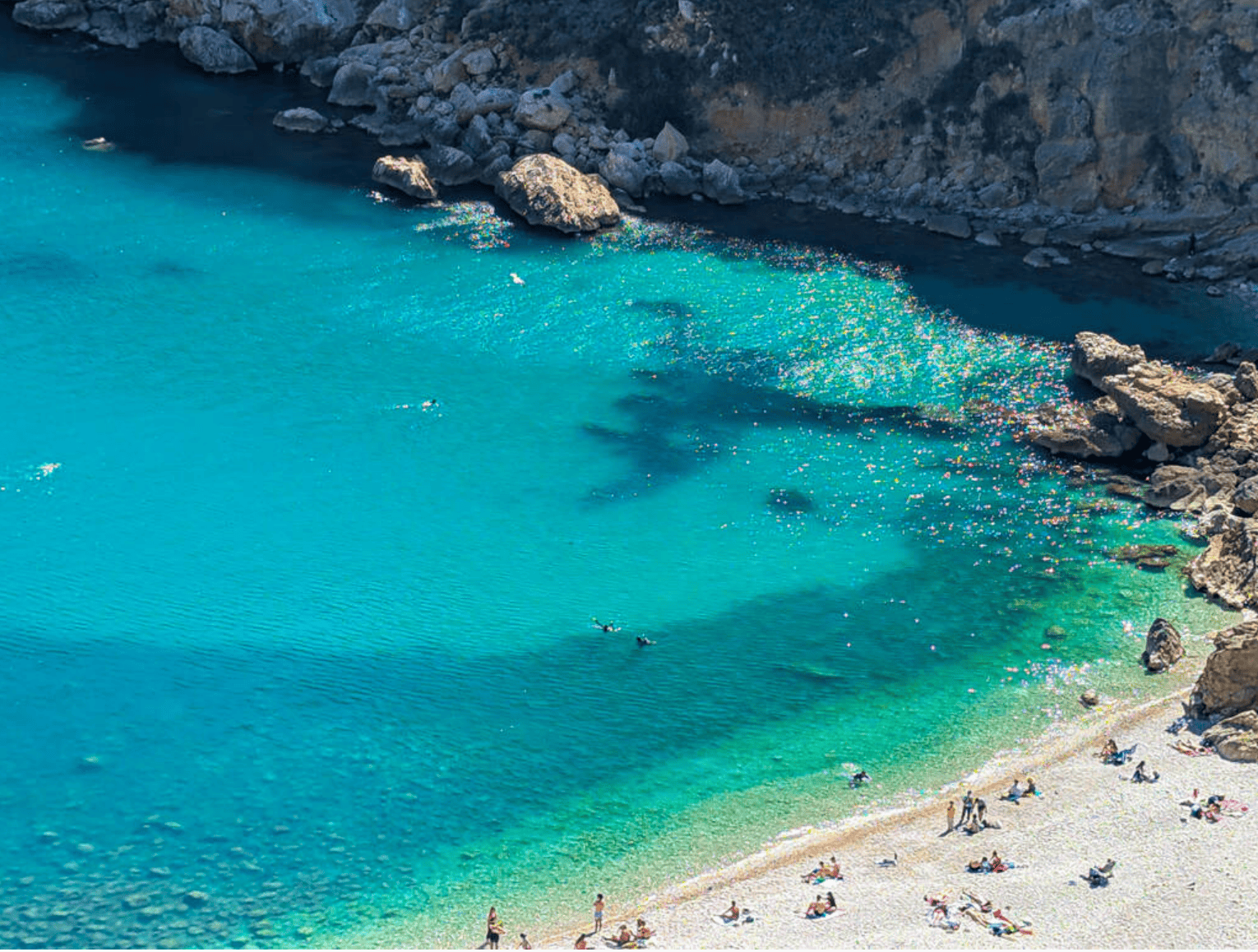
Cala Granadella – small pebble cove near Xàbia, known for clear water and scenery.
Practical information: Cala Granadella
- Surface: Pebbles/gravel – water shoes are useful
- Activities: Snorkelling, kayaking and diving
- Access: Car/taxi is most practical; vehicle access is regulated during busy periods
- Summer: Parking and road access can be restricted when capacity is reached – check Xàbia's current rules before setting out
- Best for: Couples, snorkellers, kayakers and nature lovers
Why choose it: Granadella is primarily a nature experience. It takes more planning than Alicante's city beaches but offers a very different coastal day.
Albir: a quieter beach north of Benidorm
If by “Alicante” you mean the wider Costa Blanca region, Racó de l'Albir is also relevant. It is a pebble beach beside Serra Gelada with Blue Flag status in 2026, a long seafront promenade and a substantial Scandinavian community in the area.
Beach comparison: Alicante & Costa Blanca
| Beach | Type | Best for | From central Alicante | Character |
|---|---|---|---|---|
| Playa San Juan | Fine sand | Families, full beach days | TRAM / bus | Best all-round |
| Postiguet | Fine sand | City centre, quick swims | Walk / TRAM | Most convenient |
| Albufereta | Fine sand | Families, calmer water | TRAM / bus | Quiet urban beach |
| Tabarca | Sand / rocky coves | Snorkelling, day trip | Boat ~1 hr | Most distinctive |
| Granadella | Pebbles | Nature, snorkelling, kayaking | Car day trip | Most dramatic |
| Albir | Pebbles | Quiet holidays, Scandinavians | Northern Costa Blanca | Best as a holiday base |
Plan the rest of your beach trip
Frequently asked questions
What is the best beach in Alicante?
For most visitors, Playa San Juan is the best all-round option. Postiguet is best when a central location matters most.
How long is Playa San Juan really?
Alicante Turismo lists Playa San Juan itself at about 2.9 km. It continues north as Muchavista in El Campello, so the wider sandy stretch is often described as much longer.
How do I get to Playa San Juan?
From central Alicante use TRAM line 3, 4 or 5, or bus 21/22. Check current schedules and fares before travelling.
Are Alicante's beaches good for children?
Yes. San Juan and Albufereta are particularly good family choices, while Postiguet is easiest if you are staying in the city centre.
When is the best time for a beach holiday?
June to September normally offers the most reliable swimming weather. September often gives a useful balance between warm sea and reduced peak-season pressure.
Where is the best snorkelling?
Tabarca and Cabo de las Huertas are the most interesting options close to Alicante. Granadella is also well known for snorkelling but sits near Xàbia.
Are there naturist beaches near Alicante?
Yes. Alicante Turismo lists a naturist area in the coves of Cabo de las Huertas between San Juan and Almadraba.
Are there sharks near Alicante?
Sharks do live in the Mediterranean, but encounters at normal bathing beaches are very rare. Beach flags, currents, waves, heat and any jellyfish warnings are much more relevant to everyday swimming safety.
Updated: October 2026. Beach services, transport, Blue Flag status and access rules can change. Check Alicante Turismo, TRAM d'Alacant and the relevant local authorities before travelling.