
Alicante weather by month: temperatures & best time to visit
Historical Alicante climate averages by month, including daytime and nighttime temperatures, rainfall, sea temperature and practical advice on the best time to visit.
Alicante climate: what to expect
Alicante has a dry Mediterranean climate with hot, dry summers and mild winters. The province promotes more than 300 sunny days a year, while AEMET climate normals for Alicante show roughly 311 mm of rain annually and only about 37–38 days with at least 1 mm of rainfall.
Average daily highs rise from about 17°C in January to 31°C in August. Summer is extremely dry; September and October are wetter and can bring short, intense Mediterranean storm episodes. That does not mean autumn is continuously wet, but weather warnings matter when a DANA is forecast.
At a glance: the seasons
- Winter (Dec–Feb): 17–18°C average daytime highs. Good for city breaks, golf and longer stays; the sea is cold.
- Spring (Mar–May): 20–24°C average highs. Comfortable for sightseeing, cycling and hiking.
- Summer (Jun–Aug): 28–31°C average highs. Hot, dry and the most reliable period for a classic beach holiday.
- Autumn (Sep–Nov): The sea stays warm well into October. September remains summery; autumn has the highest risk of intense rain episodes.
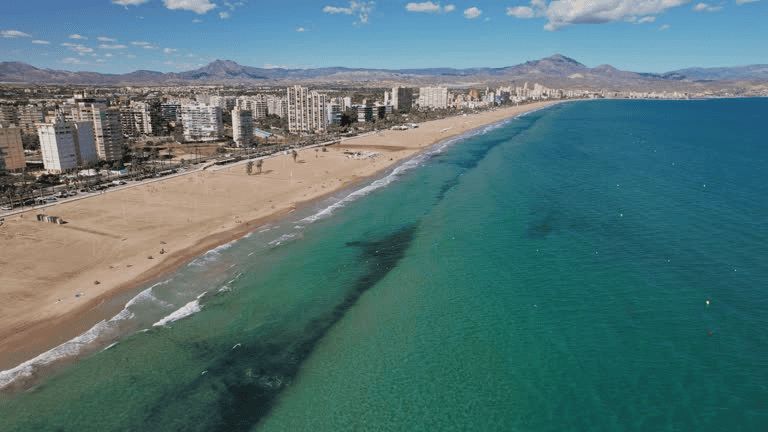
Playa San Juan – beach weather is most reliable from June to September, while October is often still mild.
January: mild winter
Avg. high: 17°C Avg. low: 6°C Sea: ~15°C
January is one of the coolest months, but days remain mild compared with northern Europe. It is a good month for the old town, Santa Bárbara Castle and day trips without summer heat.
Rainfall: 23 mm/month (AEMET normal). Good for: sightseeing, golf, longer stays.
February: quiet winter sun
Avg. high: 18°C Avg. low: 7°C Sea: ~14°C
February is similar to January, with gradually longer days. The sea is still too cold for most swimmers, while golf, walking and longer winter stays work well.
Rainfall: 22 mm/month (AEMET normal). Good for: sightseeing, golf, quiet winter breaks.
March: spring begins
Avg. high: 20°C Avg. low: 9°C Sea: ~14°C
March feels distinctly more like spring. Temperatures are well suited to sightseeing and hiking, although the sea remains cold.
Rainfall: 23 mm/month (AEMET normal). Good for: city breaks, hiking, cycling.
April: comfortable spring weather
Avg. high: 21°C Avg. low: 11°C Sea: ~16°C
April is mild and often excellent for active trips. Easter can increase visitor numbers, but walking around the city is far more comfortable than in midsummer.
Rainfall: 29 mm/month (AEMET normal). Good for: sightseeing, golf, hiking.
May: one of the best all-round months
Avg. high: 24°C Avg. low: 14°C Sea: ~18°C
May combines warm days with moderate heat. Alicante Turismo highlights May as one of the best months if your travel dates are flexible.
Rainfall: 28 mm/month (AEMET normal). Good for: city + beach, families, active trips.
June: reliable summer weather
Avg. high: 28°C Avg. low: 18°C Sea: ~22°C
June marks the start of the most reliable beach period. The sea warms noticeably, and Las Hogueras de San Juan makes the end of the month particularly lively.
Rainfall: 12 mm/month (AEMET normal). Good for: beach, city life, festivals.
July: hot, dry peak season
Avg. high: 30°C Avg. low: 21°C Sea: ~25°C
July is very dry and hot. It works best when beach time and heat are the priority; plan sightseeing for mornings or evenings.
Rainfall: 4 mm/month (AEMET normal). Good for: beach and nightlife.
August: warmest air and sea
Avg. high: 31°C Avg. low: 21°C Sea: ~26°C
August has the highest normal daytime high and the warmest sea of the year. It is also one of the busiest periods on the Costa Blanca.
Rainfall: 7 mm/month (AEMET normal). Good for: beach holidays and warm evenings.
September: excellent for a beach holiday
Avg. high: 28°C Avg. low: 18°C Sea: ~25°C
September keeps much of the summer warmth while the sea remains very warm. For many visitors, it offers the best mix of swimming weather and less intense heat.
Rainfall: 56 mm/month (AEMET normal). Good for: beach, day trips, couples and adults.
October: warm sea, more variable weather
Avg. high: 25°C Avg. low: 14°C Sea: ~22°C
October can still produce very good beach days, especially early in the month. It is also part of the season with the greatest risk of heavy rain and DANA episodes.
Rainfall: 47 mm/month (AEMET normal). Good for: city + beach early in the month, golf.
November: mild for city breaks and activities
Avg. high: 20°C Avg. low: 10°C Sea: ~19°C
November is normally mild enough for city breaks, golf, cycling and hiking. The sea becomes cool for most swimmers and daylight is shorter.
Rainfall: 36 mm/month (AEMET normal). Good for: sightseeing, golf, hiking.
December: mild Mediterranean winter
Avg. high: 18°C Avg. low: 7°C Sea: ~16°C
December is mild by northern-European standards. It suits a quieter city break, Christmas visits and winter stays rather than a classic beach holiday.
Rainfall: 25 mm/month (AEMET normal). Good for: city breaks, Christmas, longer winter stays.
Sea temperature through the year
The sea changes temperature more slowly than the air. It is usually coldest in late winter, becomes comfortable for most swimmers from June and stays warm through September and often into October. Alicante Turismo gives around 26°C in August, 25–26°C in September and roughly 22–23°C in October.
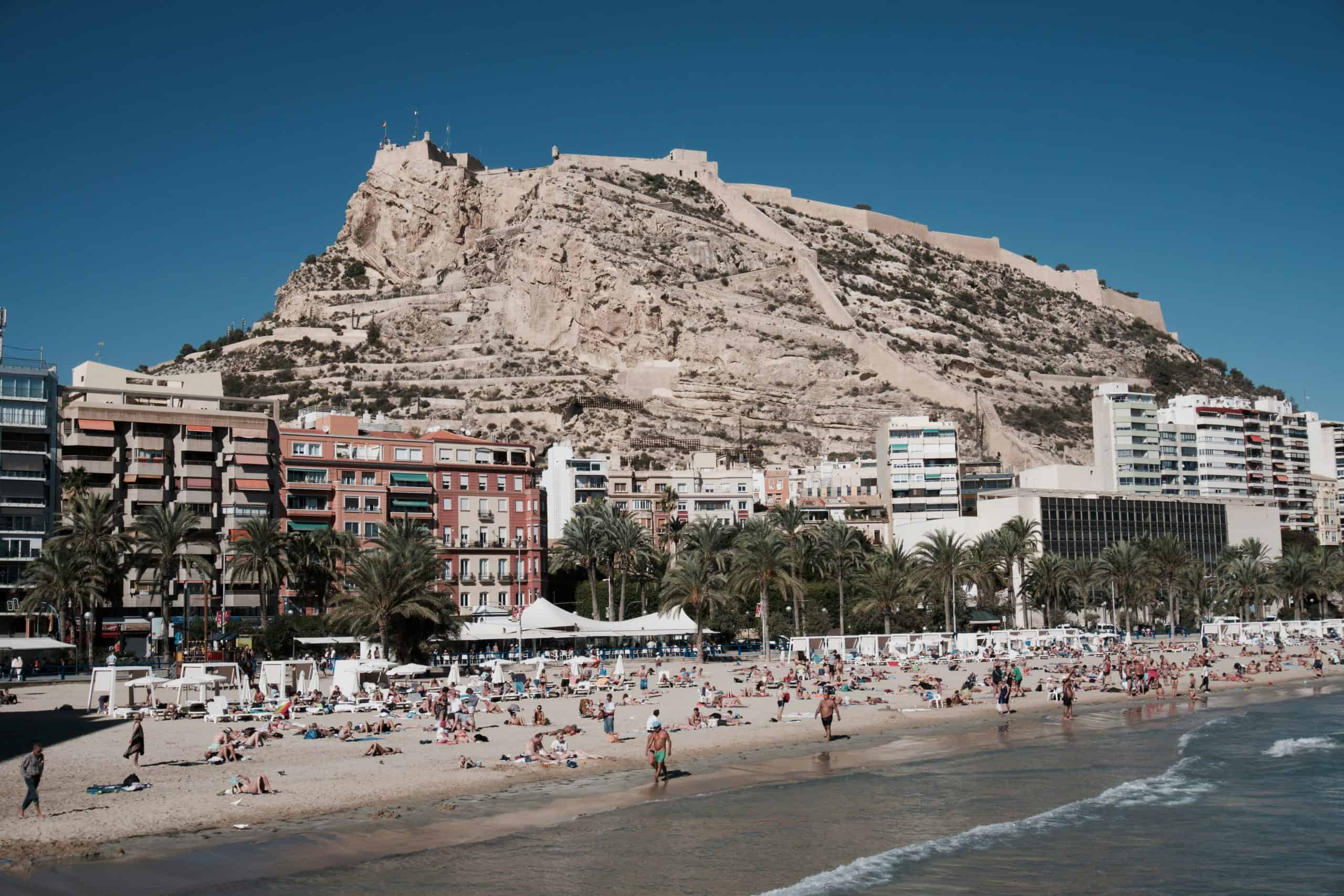
Postiguet – a city beach for warm days close to the centre.

Tabarca – the sea is warmest in late summer and early autumn.
Best time to visit Alicante
There is no single best month. The right choice depends on whether you prioritise beach weather, outdoor activities, price or avoiding the hottest conditions.
🏖️ Beach holiday
Mid-June to mid-October. June and September often give the best balance of warmth, sea temperature and crowd levels.
🚶 City break & sightseeing
April–May and October–November. Milder temperatures make it easier to explore on foot.
⛳ Golf, cycling & hiking
March–May and October–November. Avoid the hottest part of the day in summer.
💰 Lower prices & winter sun
November–February, excluding holiday periods. Normal daytime highs are roughly 17–21°C.
⭐ If you can choose only one month
May or September. Alicante Turismo specifically highlights these as strong all-round choices.
Plan the rest of your Alicante trip
Once you have chosen the month, match the weather with activities, beaches and the right place to stay.
Frequently asked questions
When is the best time to visit Alicante?
May and September are strong all-round months. For a dedicated beach holiday, mid-June to mid-October is the most reliable period.
How warm is Alicante in winter?
AEMET normals show average daily highs of about 17–18°C from December to February, with average lows around 6–7°C.
When is the sea warmest?
Usually August and September. The sea is often close to 26°C in August and remains warm into October.
Does it rain much in Alicante?
No. AEMET's normal annual rainfall is about 311 mm. September and October are wetter than summer, and individual autumn storm episodes can be very intense.
Is October still a good month to visit?
Yes, particularly early in the month. The normal daily high is around 25°C and the sea can still be about 22–23°C, although autumn storms can occur.
What should I pack?
Summer: light clothing, sun protection and swimwear. Spring/autumn: add a light jacket. Winter: bring a jumper and jacket for mornings and evenings.
Updated: October 2026. Air temperature and rainfall figures use AEMET standard climate values for the Alicante station (1981–2010). Sea temperatures are approximate typical coastal values and vary from year to year. Weather is never guaranteed; check AEMET whenever heavy-rain or DANA warnings are issued.